Kolaborasi Antar Pemangku Kepentingan dalam Penanggulangan Pertambangan Tanpa Izin di Sungai Lubuak Simpunai, Kabupaten Sijunjung
DOI:
https://doi.org/10.47134/villages.v6i2.291Keywords:
Collaborative Governance, PETI, Penegakan Hukum, Partisipasi Masyarakat, Pemerintah DaerahAbstract
Penelitian ini bertujuan untuk menganalisis proses collaborative governance dalam penegakan hukum terhadap aktivitas Pertambangan Tanpa Izin (PETI) di Sungai Lubuak Simpunai, Kabupaten Sijunjung, serta mengidentifikasi faktor-faktor penghambat efektivitasnya. Penelitian menggunakan metode deskriptif kualitatif dengan kerangka Collaborative Governance Regime (CGR) dari Emerson et al. (2012). Data diperoleh melalui wawancara mendalam dengan pihak kepolisian, dinas lingkungan, pemerintah nagari, LSM lingkungan, dan masyarakat terdampak. Hasil menunjukkan bahwa kolaborasi masih bersifat informal dan belum terstruktur, ditandai dengan lemahnya koordinasi, rendahnya partisipasi, dan kurangnya kepercayaan antaraktor. Hambatan kelembagaan meliputi ketidakjelasan kewenangan, ketimpangan sumber daya, dan tidak adanya rencana aksi bersama. Selain itu, konflik kepentingan dan ketiadaan kepemimpinan kolaboratif turut melemahkan efektivitas penegakan. Meskipun terdapat upaya individu dari beberapa aktor, strategi bersama belum terbentuk. Penelitian ini menyarankan pentingnya penguatan koordinasi lintas sektor, kejelasan peran, peningkatan keterlibatan masyarakat, serta pembentukan wadah kolaboratif formal dalam penanganan PETI.
References
Amelia, N.R. (2019). The Role of Social Capital of Gold Miners on Defending Illegal Mining in Central Sulawesi Forest Park. Jurnal Sylva Lestari, 7(3), 255-266, ISSN 2339-0913, https://doi.org/10.23960/jsl37255-266
Anand, A. (2024). Applications of spatial science, satellites, and drones in combating crime and conflict. Artificial Intelligence and Big Data, 191-209, https://doi.org/10.4337/9781803925677.00021
Arianto, B. (2024). Triangulasi Metoda Penelitian Kualitatif.
Asrulla, A., Risnita, R., Jailani, M. S., & Jeka, F. (2023). Populasi dan sampling (kuantitatif), serta pemilihan informan kunci (kualitatif) dalam pendekatan praktis. Jurnal Pendidikan Tambusai, 7(3), 26320–26332.
Badri, M., & Pitri, E. (2021). Penegakan Hukum terhadap Pelaku Tindak Pidana Pertambangan Minyak Tanpa Izin (Illegal Drilling) di Wilayah Hukum Kabupaten Batanghari. Wajah Hukum, 5(2), 637–643.
Bryson, J. M., Crosby, B. C., & Stone, M. M. (2006). The design and implementation of cross-sector collaborations: Propositions from the literature. Public Administration Review, 66(SUPPL. 1), 44–55. https://doi.org/10.1111/j.1540-6210.2006.00665.x
Chen, S. (2020). Debating Extractivism: Stakeholder Communications in British Columbia’s Liquefied Natural Gas Controversy. SAGE Open, 10(4). https://doi.org/10.1177/2158244020983007
Duda, M. (2024). Organised crime in the cross-border amber traffic: Aetiology, phenomenology and combating a criminal market. Green and Transnational Crime in Europe and Beyond Synergies and Challenges, 169-183, https://doi.org/10.4324/9781003530824-10
Emerson, K., Nabatchi, T., & Balogh, S. (2012). An integrative framework for collaborative governance. Journal of Public Administration Research and Theory, 22(1), 1–29.
Fadilla, A. R., & Wulandari, P. A. (2023). Literature review analisis data kualitatif: tahap pengumpulan data. Mitita Jurnal Penelitian, 1(3), 34–46.
Hoare, R. (2022). Combating the use of cyanide poison in ivory poaching. African Journal of Wildlife Research, 52(1), ISSN 2410-7220, https://doi.org/10.3957/056.052.0090
Kyselov, A.O. (2019). Combating illegal amber mining: Peculiarities of conflict resolution. Naukovyi Visnyk Natsionalnoho Hirnychoho Universytetu, 2019(2), 146-152, ISSN 2071-2227, https://doi.org/10.29202/nvngu/2019-2/19
Rahayu, D.P. (2024). Illegal tin mining, policy gaps and the plight of small-scale tin miners in Indonesia. South East Asia Research, 32(4), 351-369, ISSN 0967-828X, https://doi.org/10.1080/0967828X.2025.2462727
Rahyu, D. P., SH, M. H., Rahayu, S., Faisal, S. H., Wulandari, C., & Hassan, M. S. (2023). Implications Of Illegal Community Mining For Economic Development In Bangka Regency, Indonesia. Law Reform, 19(2), 270–293.
Rijali, A. (2018). Analisis data kualitatif. Alhadharah: Jurnal Ilmu Dakwah, 17(33), 81–95.
Sentanu, I. G. E. P. S. & Yustiari, S. H. (2024). Mengelola Kolaborasi Stakeholder Dalam Pelayanan Publik. PT Indonesia Delapan Kreasi Nusa.
Sugiharto, I. (2021). Politik Uang Dan Permasalahan Penegakan Hukumnya. Penerbit Nem.
Sulistiyo, U. (2023). Metode Penelitian Kualitatif. PT Salim Media Indonesia.
Turlova, Y.A. (2020). Certain topical issues of criminalization of illegal amber mining. Naukovyi Visnyk Natsionalnoho Hirnychoho Universytetu, 2020(5), 122-128, ISSN 2071-2227, https://doi.org/10.33271/nvngu/2020-5/122
Waluyo, B. (2022). Penegakan hukum di Indonesia. Sinar Grafika.
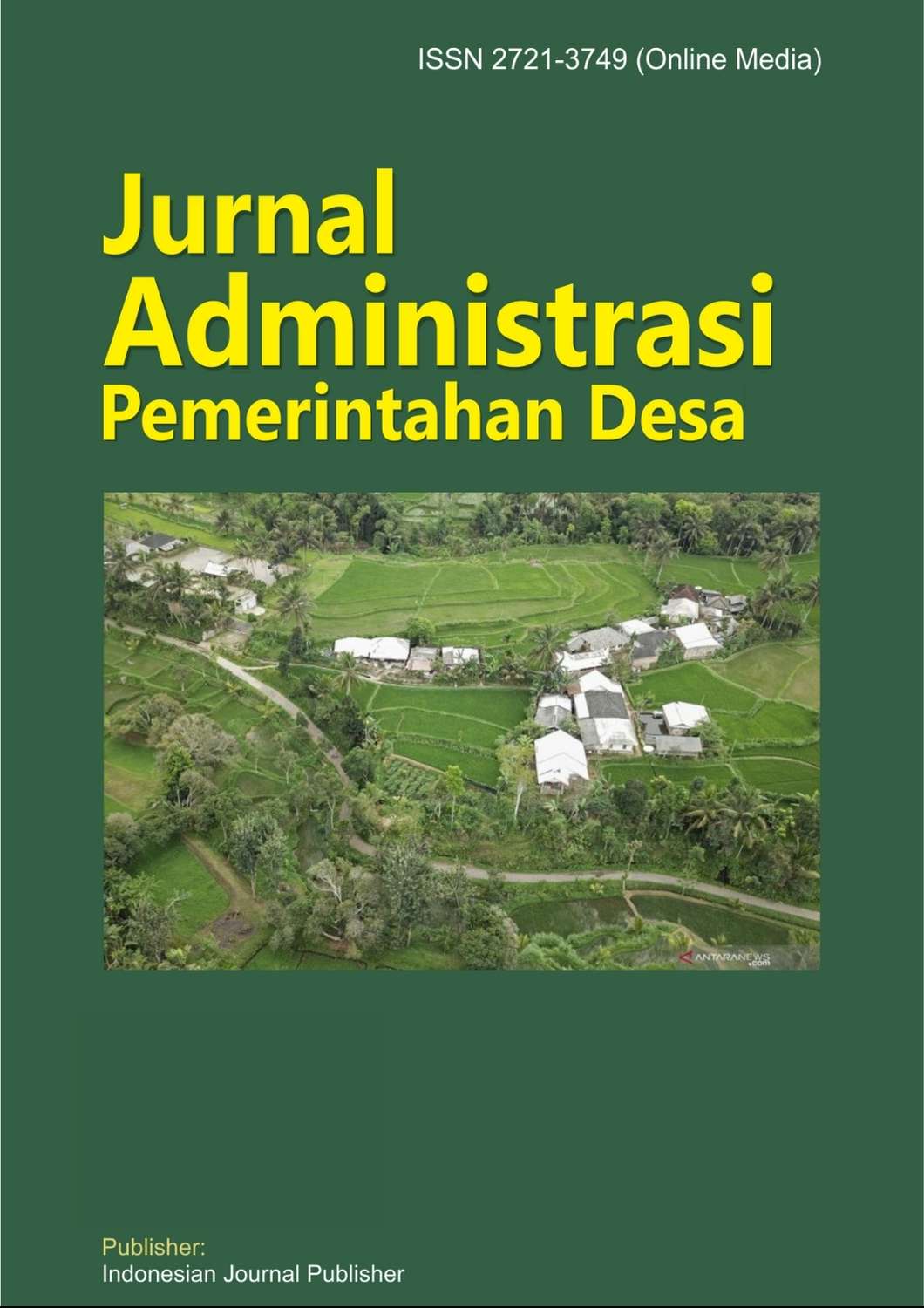
Downloads
Published
How to Cite
Issue
Section
License
Copyright (c) 2025 Anggun Nurhakim, Putri Febri Wialdi

This work is licensed under a Creative Commons Attribution 4.0 International License.
This journal is based on the work at https://villages.pubmedia.id/index.php/villages under license from Creative Commons Attribution-ShareAlike 4.0 International License. You are free to:
- Share – copy and redistribute the material in any medium or format.
- Adapt – remix, transform, and build upon the material for any purpose, even commercially.
The licensor cannot revoke these freedoms as long as you follow the license terms, which include the following:
- Attribution. You must give appropriate credit, provide a link to the license, and indicate if changes were made. You may do so in any reasonable manner, but not in any way that suggests the licensor endorses you or your use.
- ShareAlike. If you remix, transform or build upon the material, you must distribute your contributions under the same license as the original.
- No additional restrictions. You may not apply legal terms or technological measures that legally restrict others from doing anything the license permits.
Information for authors
The author should be aware that by submitting an article to this journal, the article's copyright will be fully transferred to Jurnal Administrasi Pemerintahan Desa. Authors are allowed to resend their manuscript to other journals or intentionally withdraw the manuscript only if both parties (Jurnal Administrasi Pemerintahan Desa and Authors) have agreed on the issue. Once the manuscript has been published, authors are allowed to use their published article under Jurnal Administrasi Pemerintahan Desa copyrights.
All authors are required to deliver the agreement of license transfer once they submit the manuscript to Jurnal Administrasi Pemerintahan Desa. By signing the agreement, the copyright is attributed to this journal to protect the intellectual material for the authors. Authors are allowed to share, copy and redistribute the material in any medium and in any circumstances.
• Creative Commons Attribution-ShareAlike (CC BY-SA)

Jurnal Administrasi Pemerintahan Desa is licensed under an International License